


Continuum Jump Model:
The Human Side of the Life Sciences Journey from Start Up to Scale
As life sciences organizations move from startup to scale, the external milestones may be clinical and operational—but the internal journey is deeply human.
Life sciences organizations don’t struggle because of strategy alone—they struggle when people, systems, culture and priorities fall out of sync.
The Continuum Jump Model is a human‑centered framework for navigating the pressure, cultural tensions, and transitions introduced at each stage of growth while scaling life science organizations.
Because growth itself demands change
Continuum’s Jump Model makes the predictable “messy middles” of growth and scale in Life Sciences visible - guiding leaders to intentionally evolve culture, leadership, and ways of working toward sustainable excellence through their growth journey.
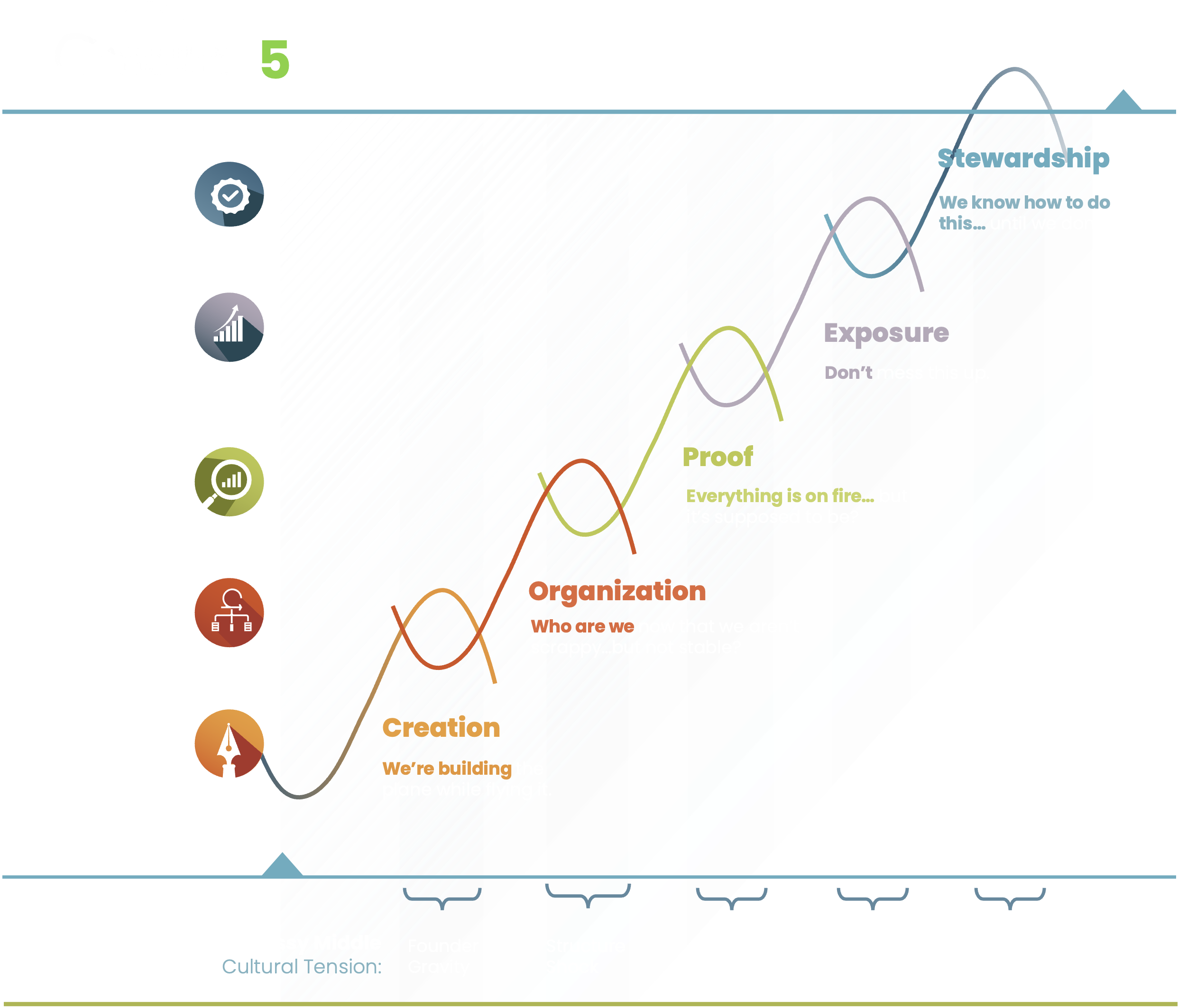
Organization, Leadership, Team, and Culture Development for Scaling Life Science Organizations
Growth requires more than effort—it requires the right jump at the right moment.
We partner with leaders navigating the messy middle between what once worked and what’s required next—supporting them to make smart, timely leadership jump moves by introducing just enough structure, clarity, and capability to fuel the next growth curve without losing the heart, energy, or performance that got them here.
-
Know when—and how—to jump.
We guide leaders to identify where their organization, teams, and critical functions are on the growth curve—and where misalignment is quietly slowing progress. Through targeted diagnostics, leader conversations, and cultural sensing, we make the invisible visible so leaders can act with confidence rather than intuition alone.Supports leaders by:
Clarifying current growth stage and emerging constraints
Identifying messy middle risks before performance dips
Aligning leadership around what must evolve next—and what should not
-
From aspiration to aligned action.
As organizations scale, strategy often outpaces the organization’s ability to execute. We support leaders to translate vision into clear priorities, decision rights, and operating principles that teams can actually use—especially in high‑pressure, regulated environments.Supports leaders by:
Aligning strategy with the people realities of scale
Creating shared clarity across leadership and critical teams in moments of ambiguity
Preventing strategy fatigue and rework during transitions
-
Evolve the culture without losing what made it work.
Culture doesn’t break during growth—it gets stretched. We guide leaders to intentionally evolve norms, ways of working, and expectations so the culture can support greater complexity, accountability, and quality without tipping into fear, blame, or bureaucracy.Supports leaders by:
Addressing predictable cultural tensions at each stage
Shifting from heroic effort to sustainable performance
Reinforcing trust, ownership, and quality mindset at scale
-
Upgrade leadership capabilities to match organizational reality.
What it takes to lead at 30 people is not what it takes to lead at 300—or 3,000. We partner with leaders to evolve leadership behaviors, roles, and people systems so decision‑making, accountability, and development keep pace with growth.Supports leaders by:
Strengthening people manager capability during scale‑up
Clarifying roles, expectations, and decision authority
Reducing friction caused by outdated structures or incentives
-
Right‑size structure, process, and governance—without overbuilding.
Too little structure creates chaos. Too much creates drag. We support leaders design operating models that support today’s demands while remaining flexible enough for what’s next—particularly in manufacturing, quality, and operational readiness environments.Supports leaders by:
Introducing “just enough” process at the right time
Reducing rework, confusion, and burnout
Supporting operational excellence without stifling agility
-
Move people with the change—not against it.
Jumping the curve isn’t just a design challenge; it’s a human one. We support leaders in activating the people side of change in ways that build, commitment, alignment, and momentum—especially when fatigue and skepticism are high.Supports leaders by:
Enabling teams to make sense of change together
Sustaining engagement through prolonged transitions
Protecting energy and trust in the messy middle
-
Enable teams to work together as complexity increases.
As organizations move through growth curves, we work with teams to onboard, align, and collaborate in culturally consistent ways—so execution holds while new capabilities and working relationships take shape.
Supports leaders by:
Enabling culturally aligned onboarding as teams grow quickly and new roles emerge
Strengthening trust, connection, and collaboration within and across teams
Tapping collective insight through structured facilitation at key inflection points





Our Clients





What Our Clients Say


We partner with organizations advancing life and the world—enabling them to align leadership, teams, and cultures to amplify their impact